AI Scams Just Jumped 14x: How to Spot Them Before They Cost You
If it feels like the scam emails and texts hitting your inbox have gotten a lot better lately, you are not imagining it. This month, security researchers reported that AI-generated scams jumped 14 times over in a single month and now make up about 40% of all phishing attacks. The old trick of spotting a fake by its bad spelling and clumsy grammar is officially dead.
Here is what matters for you as a business owner: the criminals are not only chasing big corporations anymore. Small businesses have become the easy target, because attackers know most of us do not have a full-time security team watching the door. The good news? You do not need one to protect yourself. You just need to know what these new scams look like and build a few simple habits. If you want the bigger picture on why this is happening, our earlier piece on whether AI is making hackers smarter is a good companion read.
Why the new scams are so convincing
Think of it this way. It used to take a scammer real effort to write a believable email pretending to be your bank or a vendor. They would fumble the wording, misspell your company name, and most of us could smell it a mile away.
Now they hand that job to AI. In seconds, it writes a clean, professional message that sounds exactly like a real person — your supplier, your bank, even you. It can pull details from your website and social media to make the message feel personal. That is why “just look for typos” no longer works. The typos are gone.
The three AI scams to watch right now
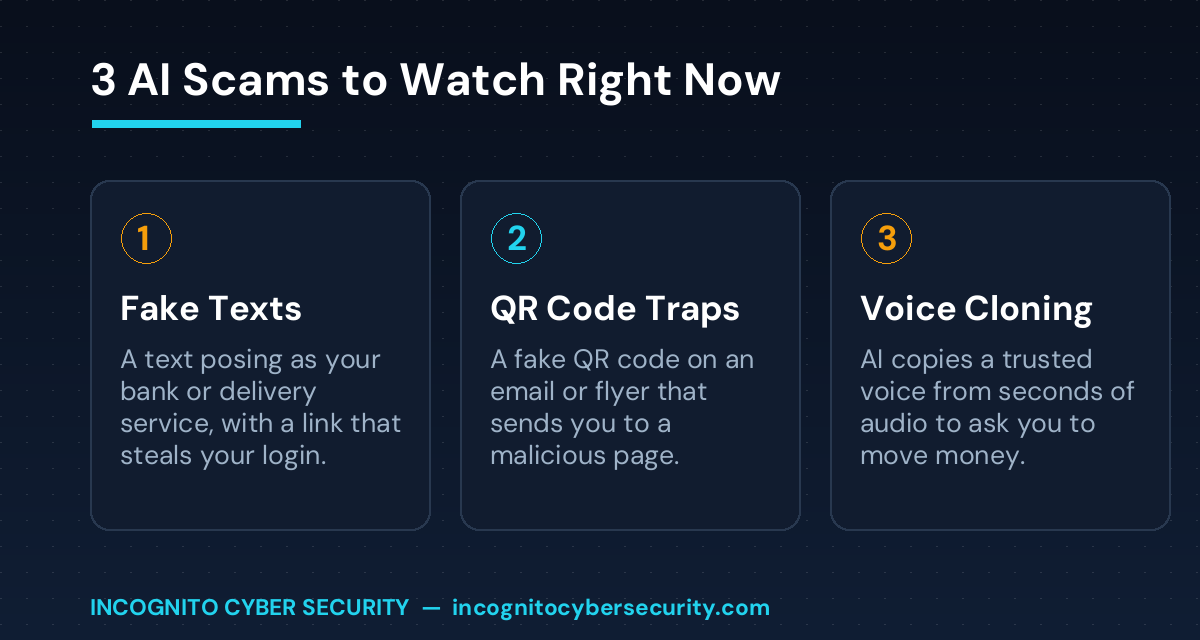
1. Fake text messages (“smishing”)
You get a text that looks like it is from a delivery service, your bank, or a government agency asking you to “confirm” something by tapping a link. The link leads to a fake page built to steal your login or card number. When in doubt, do not tap — go straight to the company’s real website or app instead.
2. QR code fraud
Scammers are now placing fake QR codes on emails, flyers, and even parking meters. You scan it expecting a menu or a payment page, and instead it sends you to a trap. Treat a random QR code like a stranger handing you a link on the street — be careful before you scan.
3. Voice cloning
This is the scary one. With a few seconds of audio pulled from a video or voicemail, AI can copy someone’s voice. Owners are getting calls that sound like their bookkeeper or a trusted vendor asking to move money or change payment details. One report found these voice scams fool three out of four people who get them. If you get an unexpected call asking for money or account changes, hang up and call the person back on a number you already know.
Four things you can do this week
You do not need fancy software to shut most of this down. Start here:
- Turn on two-step login (MFA) everywhere. A code sent to your phone on top of your password. If a scammer steals your password, this one step usually stops them cold. It is the single best protection you have, and it is a core part of good endpoint protection.
- Slow down on money and password requests. Almost every one of these scams tries to rush you. “Act now.” “Urgent.” “Wire it today.” Make it a rule: any request to move money or change account info gets verified by a second person or a phone call first. No exceptions.
- Use a password manager. It creates strong, unique passwords for every account and will not autofill them on a fake website — a quiet little warning sign that something is off.
- Train your team. Your staff is your front line. Five minutes in your next meeting showing them these three scams is worth more than any tool you can buy. We cover this in our cybersecurity awareness training for business.
The bottom line
The technology behind these scams got smarter, but the trick underneath is the same one con artists have used forever: create panic, and get you to act before you think. That part has not changed — and it is exactly where you have the advantage. Slow down. Verify. Trust the process instead of the urgency. That habit alone will protect you from the vast majority of what is out there.
Want to keep up with threats like this? Skim our Cybersecurity News & Insights blog, or if you are ready to harden your business, take a look at our small business cybersecurity consulting.
Not sure if your business is exposed?
Get a second set of eyes on your email security, backups, and team habits. A short conversation now beats a costly cleanup later. Book a complimentary visit or send us a message below.
Send us a message
Questions about protecting your business from AI-driven scams? Fill out the form and we’ll get back to you shortly.
Stay safe out there.
— Nemuel Cruz, Incognito Cyber Security